Is Your Fashion Brand Spending on Ads Without Getting Sales? Here’s Why
You’ve boosted the Instagram post, watched the likes climb, and refreshed your Shopify dashboard… only to find the order count stuck at zero.
Sound familiar? Paid ads are a powerful growth lever for fashion brands, but they can also feel like a money pit when sales don’t follow the spend. Let’s unpack the hidden reasons behind the disconnect—and, more importantly, how to fix it.
The Clicks Are Pouring In—So Why Aren’t Orders?
Digital platforms make it absurdly easy to buy traffic. The harder part is turning that traffic into revenue. Most “ad‑to‑no‑sale” scenarios boil down to one (or several) of the five issues below. As you read, jot down which ones ring true for your brand.
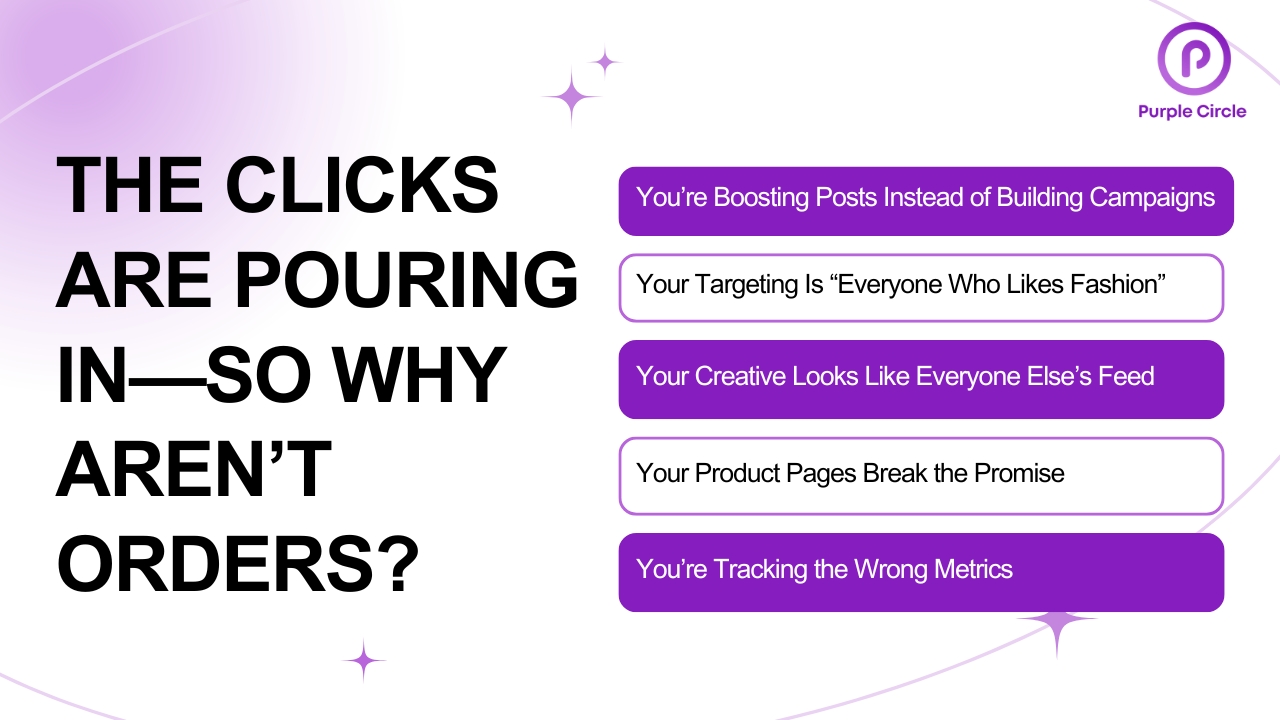
1. You’re Boosting Posts Instead of Building Campaigns
Boosting a post might feel productive, but it’s not a real marketing strategy. It expands reach, yes—but offers little control over who sees it or how they engage.
That’s where true fashion brand marketing makes the difference. A strong campaign has purpose-built objectives—like building awareness, driving product views, or recapturing lost carts.
The fix: Stop relying on boosts. Instead, set up full-funnel campaigns using Facebook Ads for fashion brands through Meta’s Ads Manager. Separate cold prospects from returning customers and tailor your message accordingly. Each dollar should be working for a reason.
2. Your Targeting Is “Everyone Who Likes Fashion”
Casting a wide net often catches… nothing useful. Platforms reward high engagement, not high purchase intent. So unless you refine who you’re talking to, you’re paying for window shoppers.
The fix: Refine your targeting. Go deeper than general interests. For example:
- Target users who engaged with your videos or added similar items to cart in the past 30 days.
- Use lookalike audiences based on real customers, not followers.
- Narrow the pool by layering interests (e.g., “ethical fashion” + “indie designers”).
Smaller, well-targeted audiences usually deliver lower cost-per-purchase—and higher-quality traffic.
3. Your Creative Looks Like Everyone Else’s Feed
Swipe through Instagram or TikTok and you’ll see the same content format over and over: polished models, perfect lighting, maybe a branded logo.
But perfection doesn’t always sell. What stops people from scrolling is emotion, relatability, and curiosity.
The fix: Use content that feels real. User-generated content (UGC), unboxings, styling videos, or clips showing how your clothing moves in real life are gold.
Your ads should feel native, not commercial. The strongest ads marketing agency campaigns often use iPhone footage over studio shots because raw equals real—and real drives results.
4. Your Product Pages Break the Promise
Even if your ad is amazing, it means nothing if the landing page falls flat.
Common issues include:
- Slow mobile load time
- Out-of-stock sizes or unclear inventory
- No customer reviews
- A disconnect between ad messaging and the product page
The fix: Check your most-clicked product pages and run them through a mobile experience test. Keep the message consistent. If your ad promotes “2-for-1 tanks,” your page should open with that exact headline.
Good Google Ads for your business work best when the click-to-checkout experience feels seamless and trustworthy.
5. You’re Tracking the Wrong Metrics
Clicks are easy to chase, but they don’t pay the bills. Many fashion brands fall into the trap of optimizing ads for engagement rather than actual revenue.
The fix: Focus on business-building metrics:
- Cost per add-to-cart
- ROAS (Return on Ad Spend)
- MER (Marketing Efficiency Ratio)
- Cost per unique purchase
If your ads are driving traffic but not conversions, that’s a red flag. Look at where people drop off—then fix that part of the journey.
Practical Steps You Can Take To Fix This
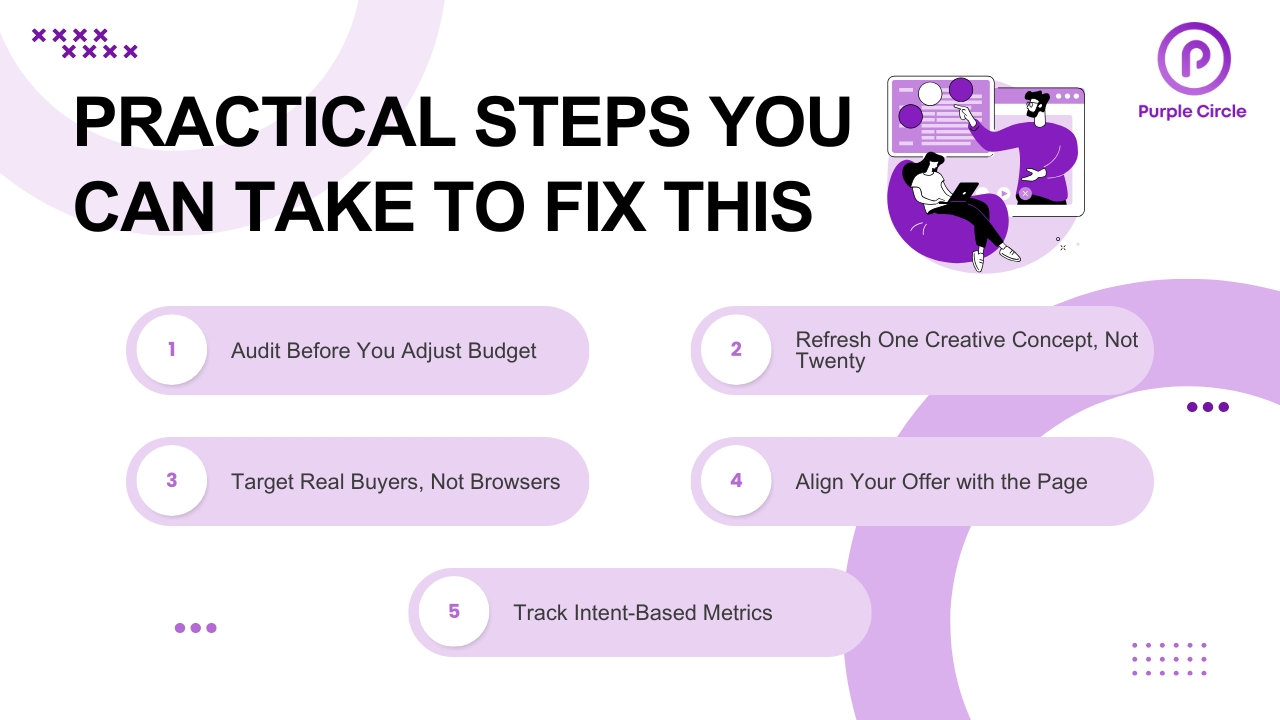
🔍 Audit Before You Adjust Budget
Look at your funnel from top to bottom:
Impressions → Clicks → Product Views → Add to Cart → Checkout → Purchases
Where’s the biggest drop? That’s your starting point.
If product views are low: Your landing page might be irrelevant or slow.
If carts don’t convert: It could be pricing, trust issues, or payment options.
If checkout stalls: Look for missing shipping info, guest checkout, or surprise fees.
🧠 Refresh One Creative Concept, Not Twenty
Pick your highest-clicked ad with the lowest conversion. Rewrite the opening line, swap in UGC, or test a new call-to-action. Focused testing reveals more than scattered efforts.
🎯 Target Real Buyers, Not Browsers
Export your past 60-90 days of buyers, create a custom audience, and build a lookalike based on that. Exclude “frequent visitors, no purchase.” This will shrink your reach—but improve purchase rates.
🔁 Align Your Offer with the Page
Make sure the message from ad to landing page matches exactly. Say “Free Shipping Today Only”? That line better be the first thing on the page. It reduces confusion and keeps shoppers engaged.
📊 Track Intent-Based Metrics
Swap out CTR and replace it with cost per unique add-to-cart. Why? Because that shows real buying intent, not just curiosity.
Final Thoughts
Here’s the truth: the ad platform probably isn’t the problem. It’s the disconnect between awareness and action. When you align messaging, audience targeting, and the shopping experience, sales follow naturally.
If you’re unsure where the leak is or need clarity on your funnel, Purple Circle helps fashion brands turn wasted ad spend into profitable growth. Whether you’re just setting up Google Ads for your business or looking to scale Facebook Ads for fashion brands, we’ve been there—and we can help you get it right.
Is Your Fashion Brand Spending on Ads Without Getting Sales? Here’s Why
Trusted by 235+ brands