Keyword Research Tips for Ecommerce Brands: How to Find the Right Terms to Target
For ecommerce brands, mastering the art of keyword research is crucial for standing out in an increasingly competitive online marketplace. Choosing the right keywords isn’t just about boosting website traffic; it’s about attracting high-intent shoppers who are ready to purchase. Whether you’re launching a new online store or scaling an established brand, effective keyword research forms the foundation of a successful ecommerce SEO strategy.
This guide will walk you through essential tips and strategies to find the most profitable terms to target, helping you maximize visibility and drive conversions.
Why Keyword Research Matters for Ecommerce Brands
In the world of ecommerce, keyword research isn’t just about ranking on Google—it’s about connecting with potential customers at every stage of their buying journey. By strategically targeting the right keywords, you can:
- Reach High-Intent Shoppers: Attract users who are actively looking to make a purchase.
- Increase Organic Traffic: Drive relevant visitors who are more likely to convert.
- Outperform Competitors: Gain a competitive edge by targeting niche keywords your competitors are overlooking.
Incorporating effective SEO strategies for ecommerce sites can significantly enhance your brand’s online presence, leading to increased sales and brand loyalty.
How to Find the Right Keywords to Target for Ecommerce Brands
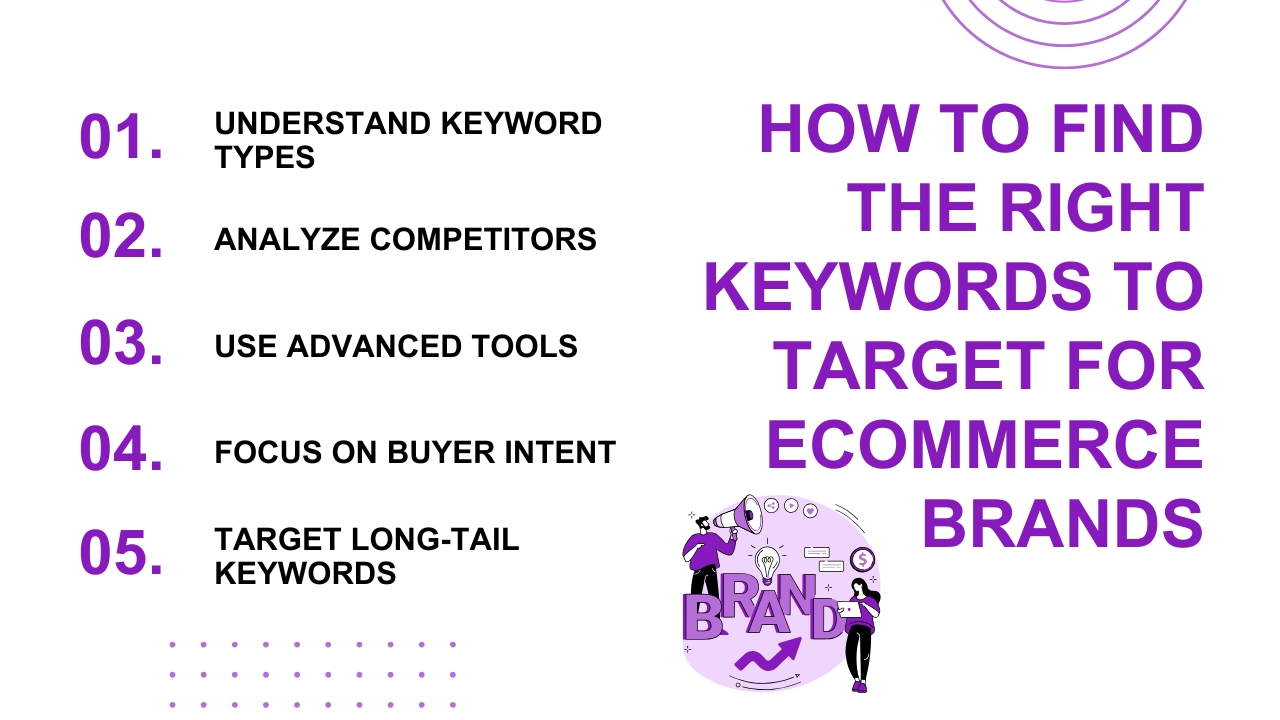
1. Understand the Different Types of Keywords
To build an effective ecommerce SEO strategy, it’s essential to understand the different types of keywords:
- Short-Tail Keywords: These are broad search terms like “women’s shoes” or “smartphones.” Although they have high search volume, they are highly competitive and may not always indicate purchase intent.
- Long-Tail Keywords: More specific phrases like “red high heel shoes for women” or “best budget smartphones under $300.” These keywords typically have lower search volume but higher conversion rates, as they reflect more specific purchase intent.
- Product-Specific Keywords: These include brand names, product categories, or model numbers, such as “Nike running shoes” or “iPhone 14 Pro Max case.”
- Informational Keywords: These are search queries aimed at gathering information, such as “how to style white sneakers” or “best laptops for graphic design.” They are great for attracting top-of-the-funnel traffic and nurturing potential buyers.
Understanding how to choose the keywords for ecommerce brand effectively involves balancing these different types to capture shoppers at every stage of the buying funnel.
2. Conduct Competitor Analysis
One of the most effective SEO strategies for ecommerce sites is to analyze competitors who are already ranking well. Here’s how to do it:
- Identify Top Competitors: Use tools like SEMrush, Ahrefs, or Moz to discover your top online competitors.
- Analyze Their Keywords: Check which keywords they are ranking for and which pages are driving the most traffic.
- Find Keyword Gaps: Identify opportunities where your competitors are ranking but you are not. Targeting these gaps can give you a competitive advantage.
By conducting thorough competitor analysis, you can discover lucrative keyword opportunities and avoid competing directly for overly saturated terms.
3. Use Advanced Keyword Research Tools
To find the best keywords for your ecommerce store, leverage powerful tools such as:
- Google Keyword Planner: Ideal for discovering search volume, competition, and cost-per-click data.
- Ahrefs and SEMrush: Comprehensive tools for competitor analysis, keyword gap analysis, and tracking keyword positions.
- Answer the Public: Useful for finding question-based keywords to target in blog content.
- Ubersuggest: Great for uncovering long-tail keywords and content ideas.
Using these tools, you can create a balanced list of short-tail, long-tail, and product-specific keywords, optimizing your ecommerce SEO strategy for maximum reach and impact.
4. Optimize for Buyer Intent
Not all keywords are created equal—understanding search intent is crucial for converting visitors into customers. Ecommerce keywords generally fall into three categories:
- Navigational Intent: Users looking for a specific website or brand (e.g., “Nike official store”).
- Informational Intent: Users seeking information or solutions to problems (e.g., “how to clean leather boots”).
- Transactional Intent: Users ready to purchase (e.g., “buy women’s black boots online”).
Focus on targeting transactional keywords to capture high-converting traffic, while also creating content around informational keywords to engage potential buyers earlier in their journey.
5. Leverage Long-Tail Keywords for Niche Targeting
Long-tail keywords are often less competitive and have higher conversion rates, making them ideal for niche ecommerce products. For example, instead of targeting “women’s clothing,” go for more specific terms like “organic cotton summer dresses for women.”
- Use Product Descriptions: Include long-tail keywords naturally in product descriptions for better relevancy.
- Create Niche Blog Content: Write guides, reviews, or comparison articles targeting long-tail keywords to attract more targeted traffic.
Implementing long-tail keywords strategically will strengthen your ecommerce SEO strategy, helping you reach highly motivated buyers.
Why Purple Circle is the Best Ecommerce SEO Agency
At Purple Circle, we specialize in SEO strategies for ecommerce sites, delivering outstanding results for brands like Rangraze, a women’s clothing brand. Here’s how:
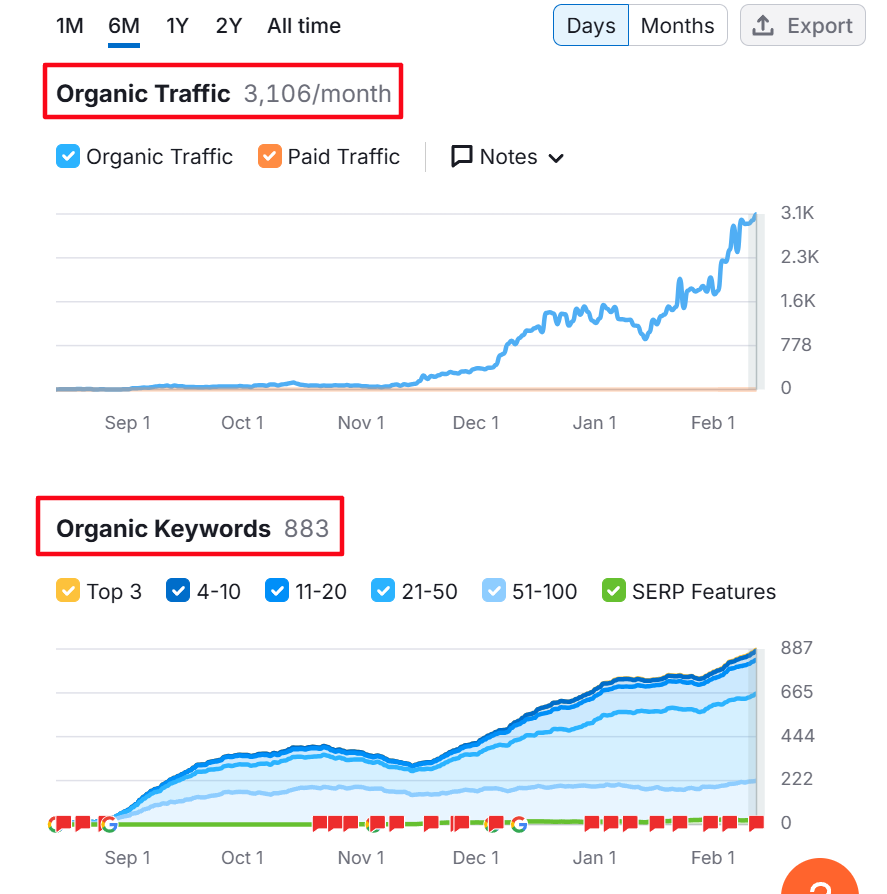
- Explosive Organic Traffic Growth: In just six months, Rangraze saw a surge in organic traffic from nearly zero to over 3,100 visitors per month.
- Keyword Dominance: We helped Rangraze rank for 883 organic keywords, positioning the brand for long-term visibility and growth.
Our success with Rangraze is a testament to our tailored approach to ecommerce SEO strategy, combining in-depth keyword research, competitor analysis, and content optimization to deliver exceptional results. If you’re looking to amplify your brand’s online presence, Purple Circle is the ecommerce SEO agency you can trust.
Conclusion: Master Your Ecommerce SEO Strategy with Effective Keyword Research
Keyword research is the backbone of any successful ecommerce SEO strategy. By understanding the different types of keywords, analyzing competitors, using advanced tools, and focusing on buyer intent, you can effectively choose the keywords for your ecommerce brand and drive high-converting traffic to your store.
Purple Circle has a proven track record of helping ecommerce brands like Rangraze achieve remarkable SEO results. Ready to take your ecommerce store to the next level? Contact us today to learn how we can help you dominate the search results and grow your business.

Keyword Research Tips for Ecommerce Brands: How to Find the Right Terms to Target
Trusted by 235+ brands