

$30K to $57K in 31 Days: How Catalog Ads Beat New Creative for a US Apparel Brand
By Ashish Rai, CEO, Purple Circle · August 2026 · 5 min read
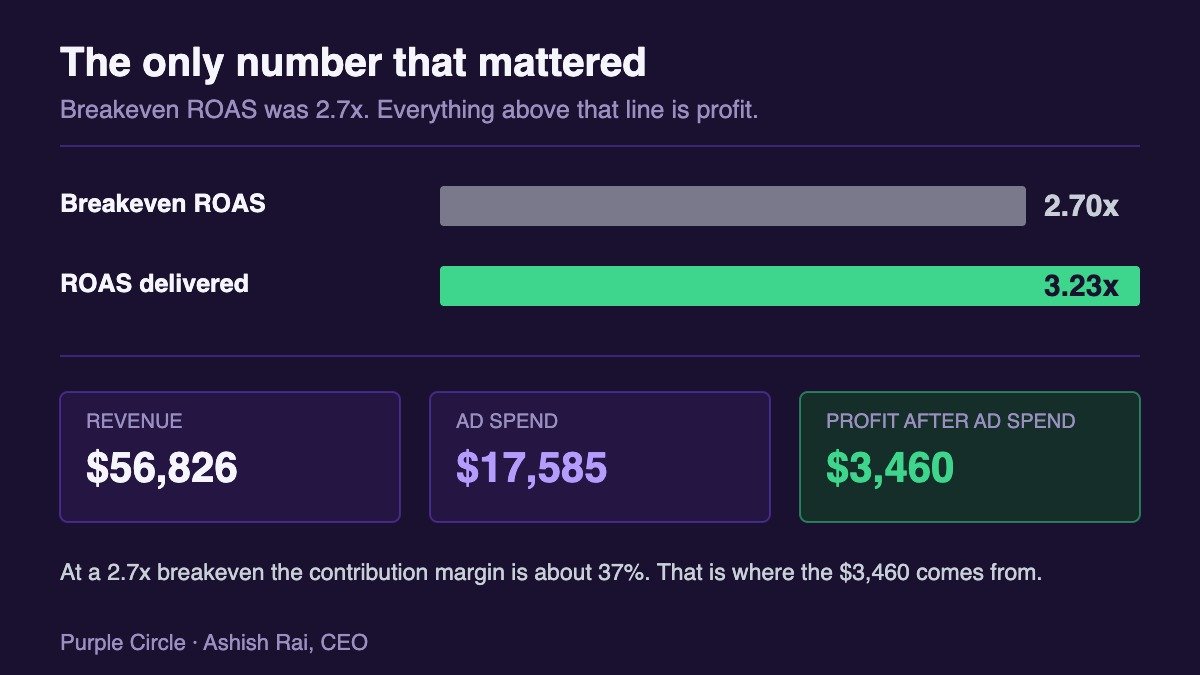
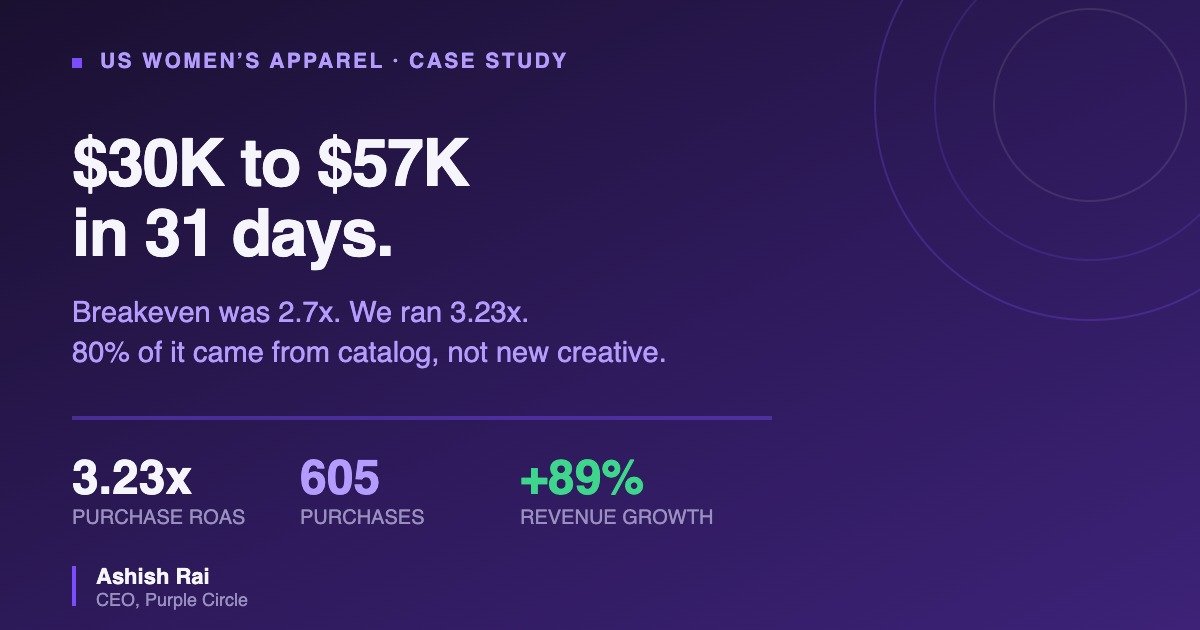
Short answer: We nearly doubled monthly revenue for a US women’s apparel brand in July 2026, from about $30,000 to $56,826, at a 3.23x purchase ROAS against a 2.7x breakeven. Most of the growth did not come from new creative. It came from making the catalog do the selling.
The situation
A direct-to-consumer women’s apparel brand in the US. Wide SKU range, average order value just under $94, selling through Shopify.
The account was not broken. It was running roughly $30,000 a month and holding. The problem was that every conversation about growth turned into a conversation about making more video, and the cost of that content was eating the margin it was supposed to create.
The brand knew its breakeven ROAS: 2.7x. That number is the reason this worked. Most brands we talk to cannot tell us theirs, which means they cannot tell whether a 3x month was good or a disaster.
What we did
1. Set the target from the margin, not from the benchmark
Breakeven was 2.7x. So 2.7x is not a target, it is a floor. Anything below it loses money no matter how good the dashboard looks.
We set the working target at 3.2x, which leaves enough room to absorb a bad week without dipping under the floor. Every budget decision for the month was checked against that number and nothing else.
2. Made catalog the engine, not the afterthought
This is the part most apparel brands get backwards. They treat catalog as a retargeting cleanup layer and put the budget into prospecting creative.
For a brand with a wide SKU range, that is the wrong way round. A shopper who looked at three dresses does not want a brand video. She wants those three dresses.
By the end of the month, catalog was driving about 80% of revenue, roughly $45,500 of the $56,826. Creative accounted for the other 20%.
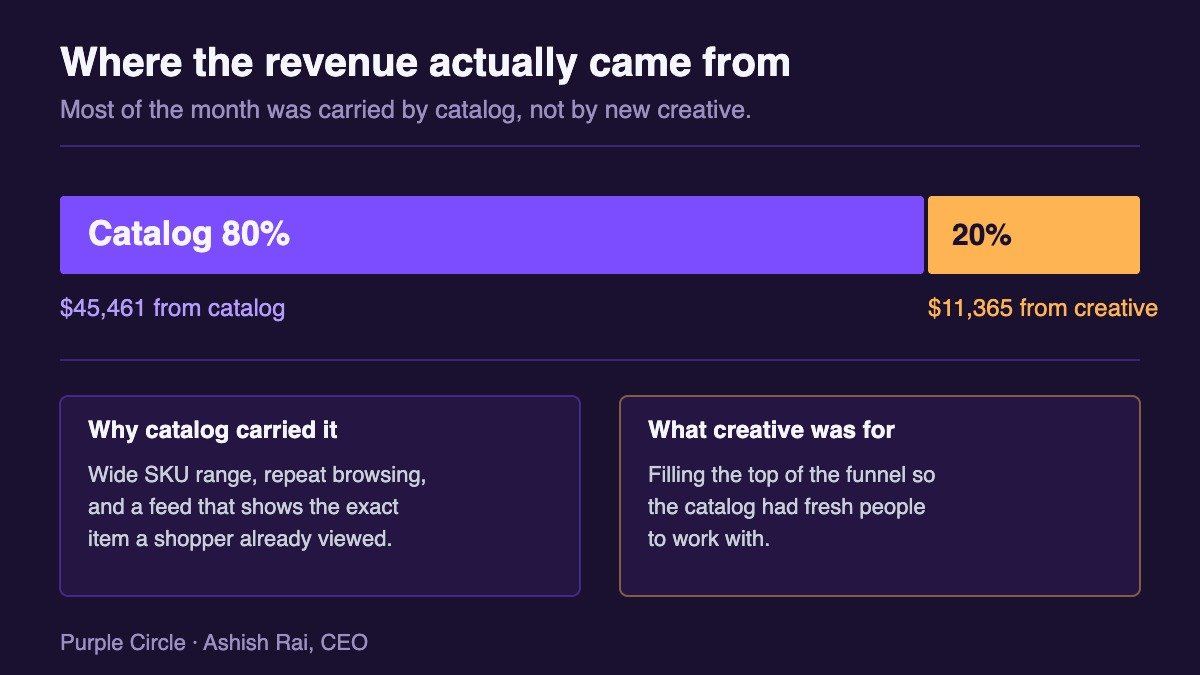
That does not mean creative was unimportant. It means creative had a different job: keep filling the top of the funnel so the catalog always had fresh people to work with. Judging those campaigns on their own ROAS would have got them switched off, and the catalog would have starved within two weeks.
3. Tested 20 creatives and only scaled 7
We ran 20 creatives through testing. Seven earned budget. Thirteen were cut.
A 35% hit rate is normal. The mistake is not having a low hit rate, it is not planning for one. If you build a month around four creatives and expect all four to work, you have no plan when two of them fail in week one.
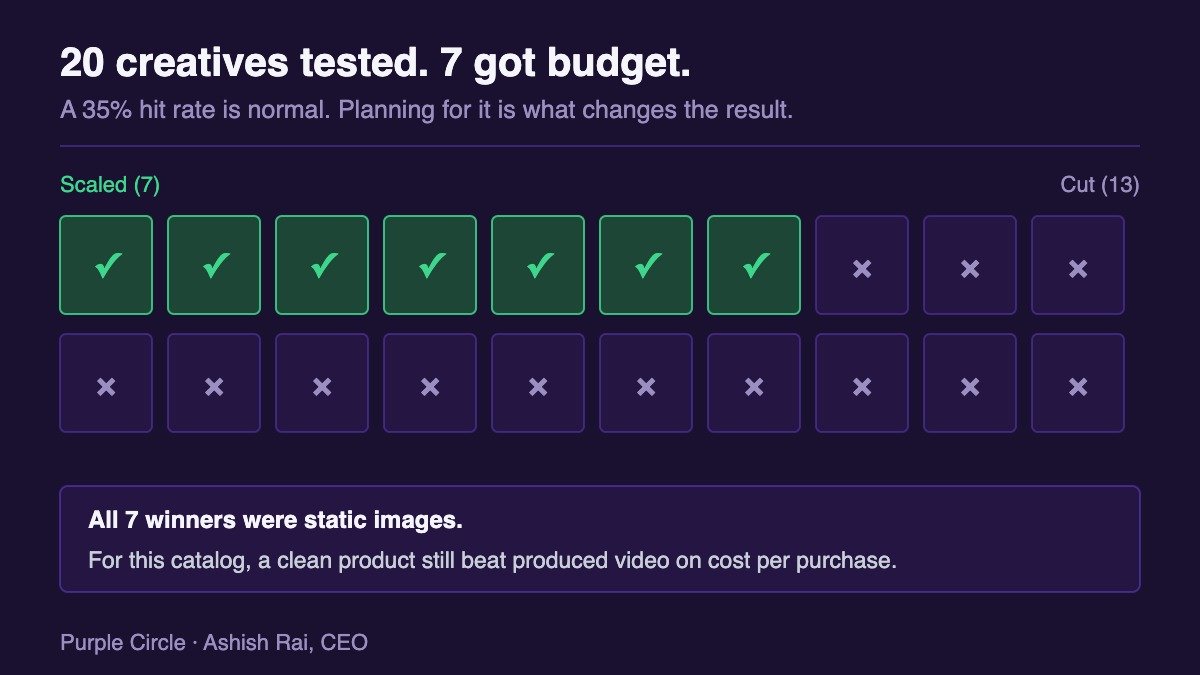
All seven winners were static images. Not a single produced video made it through. For this catalog, a clean product shot on a plain background beat everything more expensive, because the job of that ad was not to entertain. It was to show the product clearly enough that the click was qualified.
We stopped video production for the month. That saved money and it improved results at the same time.
4. Let losing campaigns stay dead
There were 305 campaigns in the account. Many sat at zero spend all month.
We did not revive them. A campaign that stopped working does not usually start working again because you increased its budget. Leaving them off kept the spend concentrated on the seven creatives and the catalog structure that were actually returning above 2.7x.
The results
July 2026, one month:
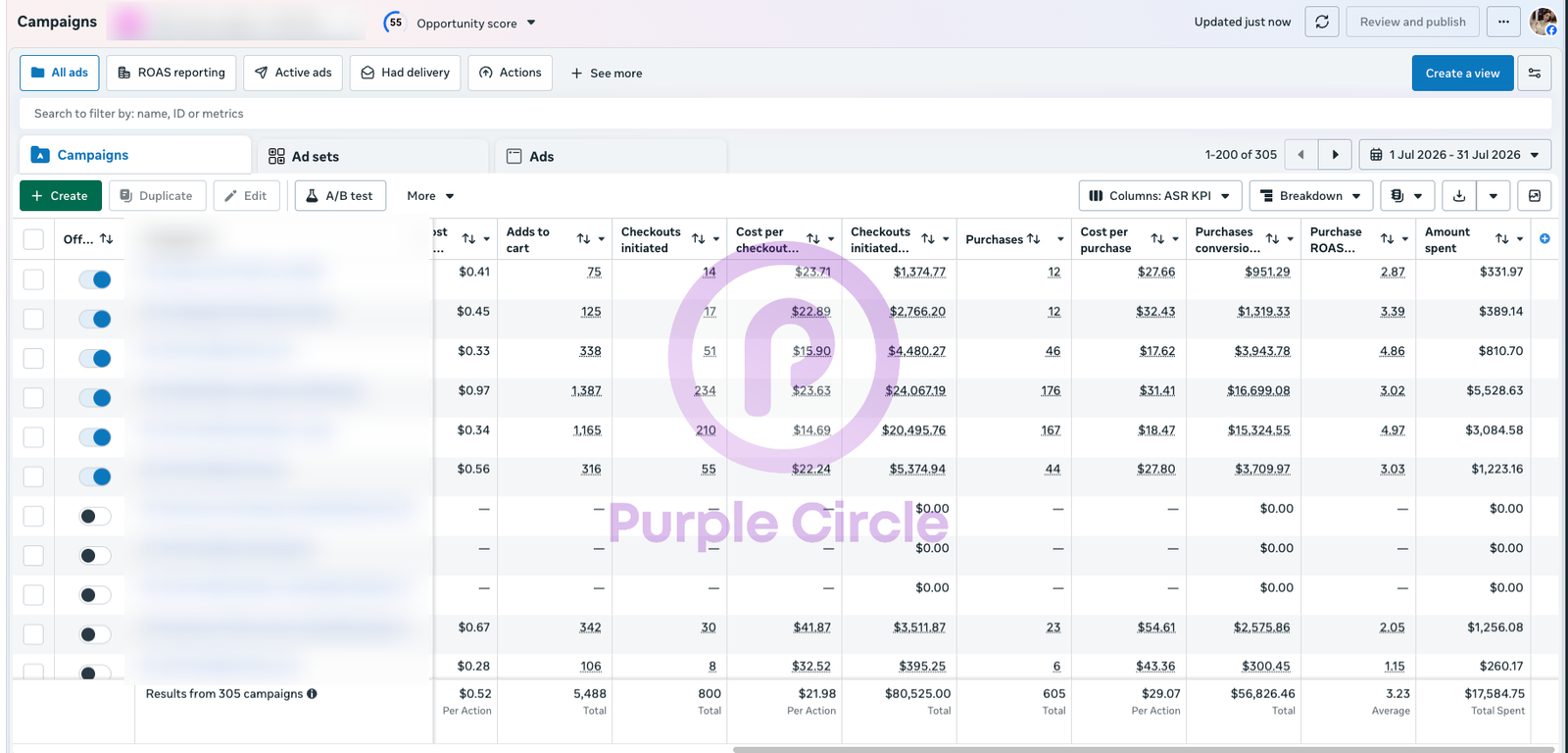
| Metric | Result |
|---|---|
| Revenue | $56,826 |
| Ad spend | $17,585 |
| Purchase ROAS | 3.23x (breakeven 2.7x) |
| Purchases | 605 |
| Cost per purchase | $29.07 |
| Average order value | $93.93 |
| Month on month growth | +89% |
At a 2.7x breakeven, contribution margin works out to roughly 37% of revenue. So $56,826 produced about $21,050 of contribution against $17,585 of ad spend.
That is roughly $3,460 of real profit for the month, after the ads paid for themselves.
It is a smaller number than the ROAS. It is also the only number that pays anyone.
What we have not fixed yet
Honest case studies include the part that is still broken.
The account produced 5,488 adds to cart and only 800 checkouts initiated. That is a 14.6% add-to-cart to checkout rate, and it is low.
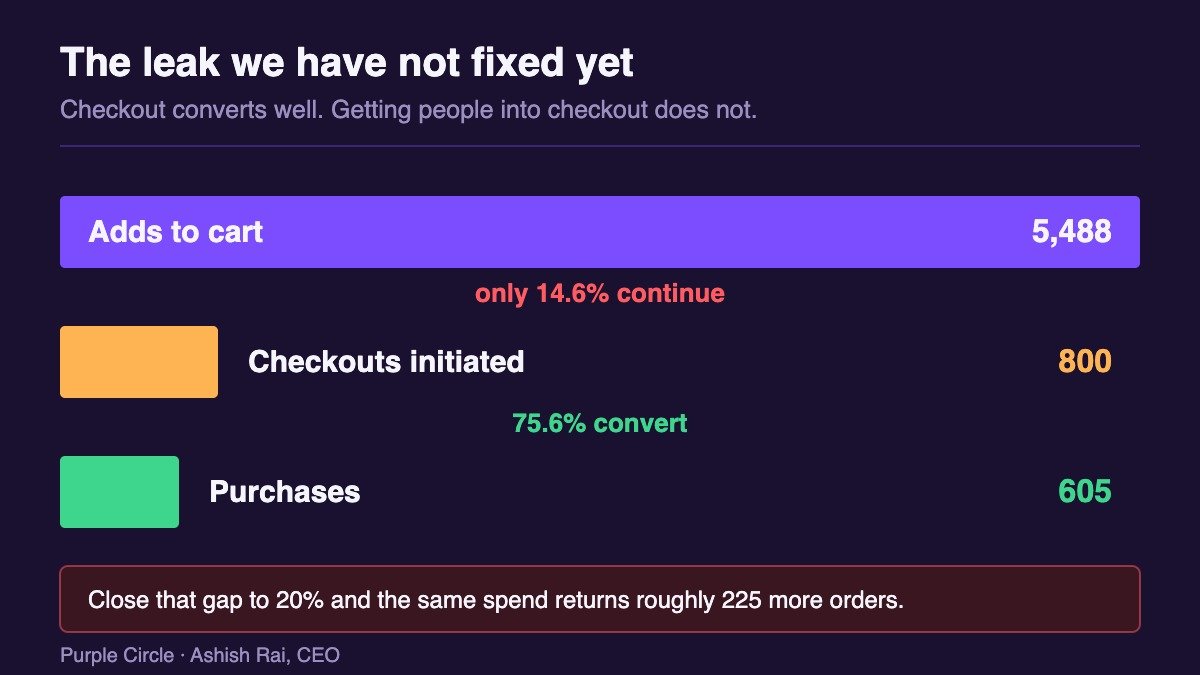
Once a shopper reaches checkout, 75.6% of them buy. That is strong. So the payment step is fine and the offer is fine. The problem sits between the cart and the checkout button, which usually means shipping cost revealed too late, a slow cart drawer, or no clear path forward on mobile.
Lift that 14.6% to 20% and the same ad spend returns roughly 225 more orders a month. No extra budget. No new creative. That is where the next phase of work goes, and it is a website problem, not an ad account problem.
What to take from this
- Know your breakeven ROAS first. Without it, 3.2x and 2.4x look like the same month.
- For wide catalogs, catalog ads are the engine. Creative feeds them. Judge it on that, not on its own ROAS.
- Budget for a 35% hit rate. Test more than feels necessary, cut fast, back what survives.
- Static can beat video. Test it rather than assuming.
Ashish Rai is the CEO of Purple Circle, a performance marketing agency for D2C ecommerce brands. If your ROAS looks fine and your bank balance does not, the breakeven number is usually where the answer is.
Figures are from the brand’s Meta ads account, 1 to 31 July 2026. Client details withheld at their request.
$30K to $57K in 31 Days: How Catalog Ads Beat New Creative for a US Apparel Brand
Trusted by 235+ brands