




This case study analyzes the performance and scaling strategy for a US-based e-commerce brand. By moving away from inefficient historical targeting and focusing on data-driven funnel optimization, we achieved significant growth in January 2026.
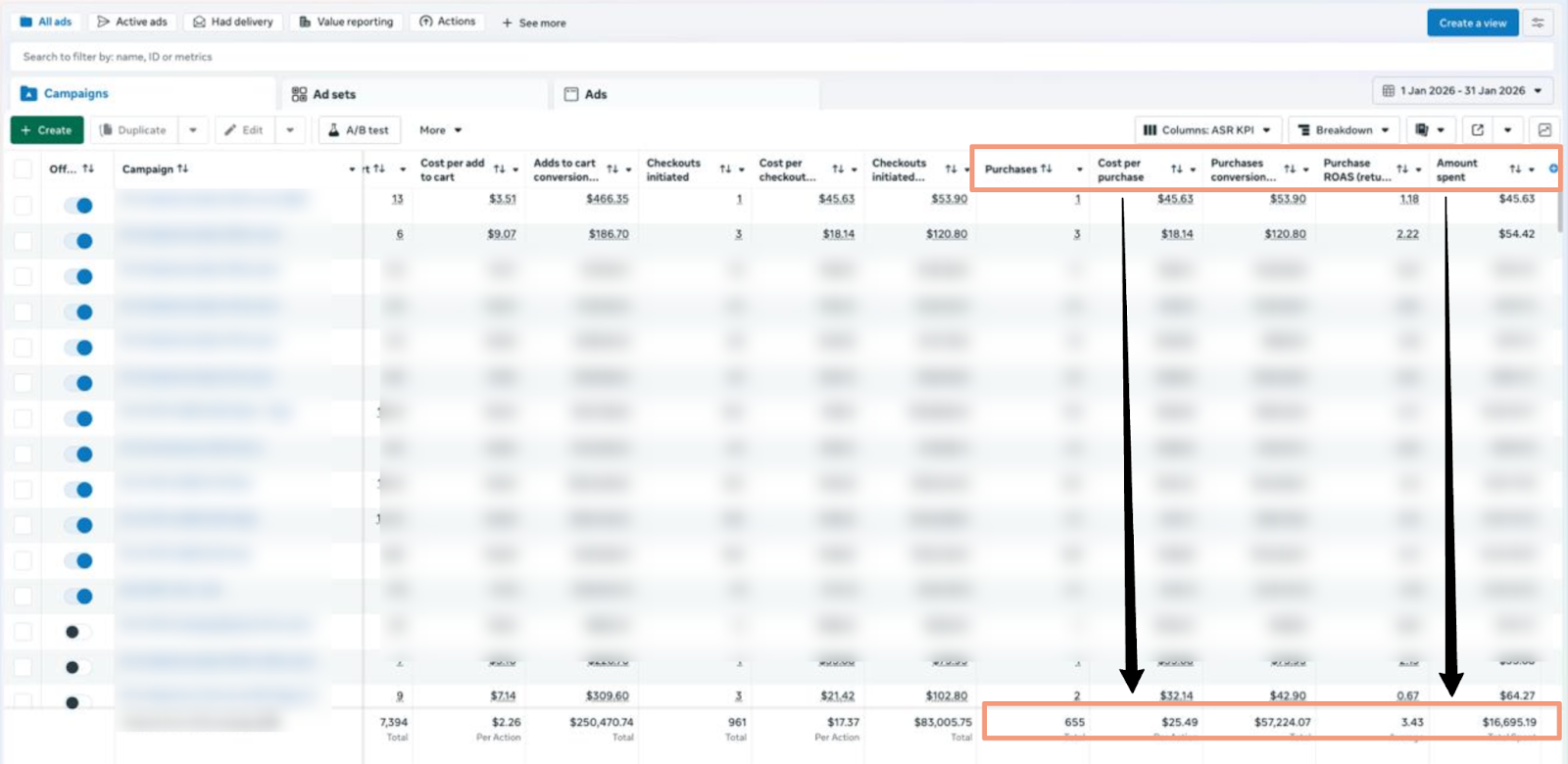
January 2026 Performance Metrics
The account demonstrated high efficiency and strong purchase intent across the entire month.
- Total Ad Spend: $16,695.19
- Total Sales Revenue: $57,224.07
- Average Account ROAS: 3.43x
- Total Purchases: 655
- Average Cost Per Purchase: $25.49
- Add-to-Cart (ATC) Value: $250,470.74
Strategic Execution: How We Increased Sales
To drive these results, we implemented a structured strategy focused on three key pillars derived from the data:
- Aggressive Top-of-Funnel (TOF) Acquisition We identified that Top-of-Funnel campaigns were the primary engine for new customer growth. By allocating the majority of the budget here, we maintained high efficiency, with individual TOF campaigns reaching a 4.71x ROAS. This ensured a constant stream of fresh traffic into the store.
- Capturing High Purchase Intent The strategy focused on “warm” leads. While we generated $57k in direct sales, we built a massive pipeline of over $250,000 in Add-to-Cart value. By tracking these high-intent users, we were able to lower our cost per action to just $2.26 across the account.
- Seasonal Scaling & Stability As the month progressed into the Valentine’s Day shopping season, we scaled budgets on winning ad sets. This allowed us to maintain a stable 3.43x average ROAS even as total spend increased to over $16,000. We focused on campaigns that delivered consistent results, with peak performers hitting 4.11x and 4.09x ROAS.
Conclusion
By prioritizing Top-of-Funnel efficiency and maximizing the value of Add-to-Carts, we successfully scaled the brand to nearly $60,000 in monthly revenue. The high volume of initiated checkouts (961) and purchases (655) proves that the current strategy is primed for continued scaling in the US market.
Contact us for more case studies.