
⭐️
How
How Purple Circle Helped a D2C Jewellery Brand Hit 637% ROAS on Google Ads
Trusted by 235+ brands





Overview
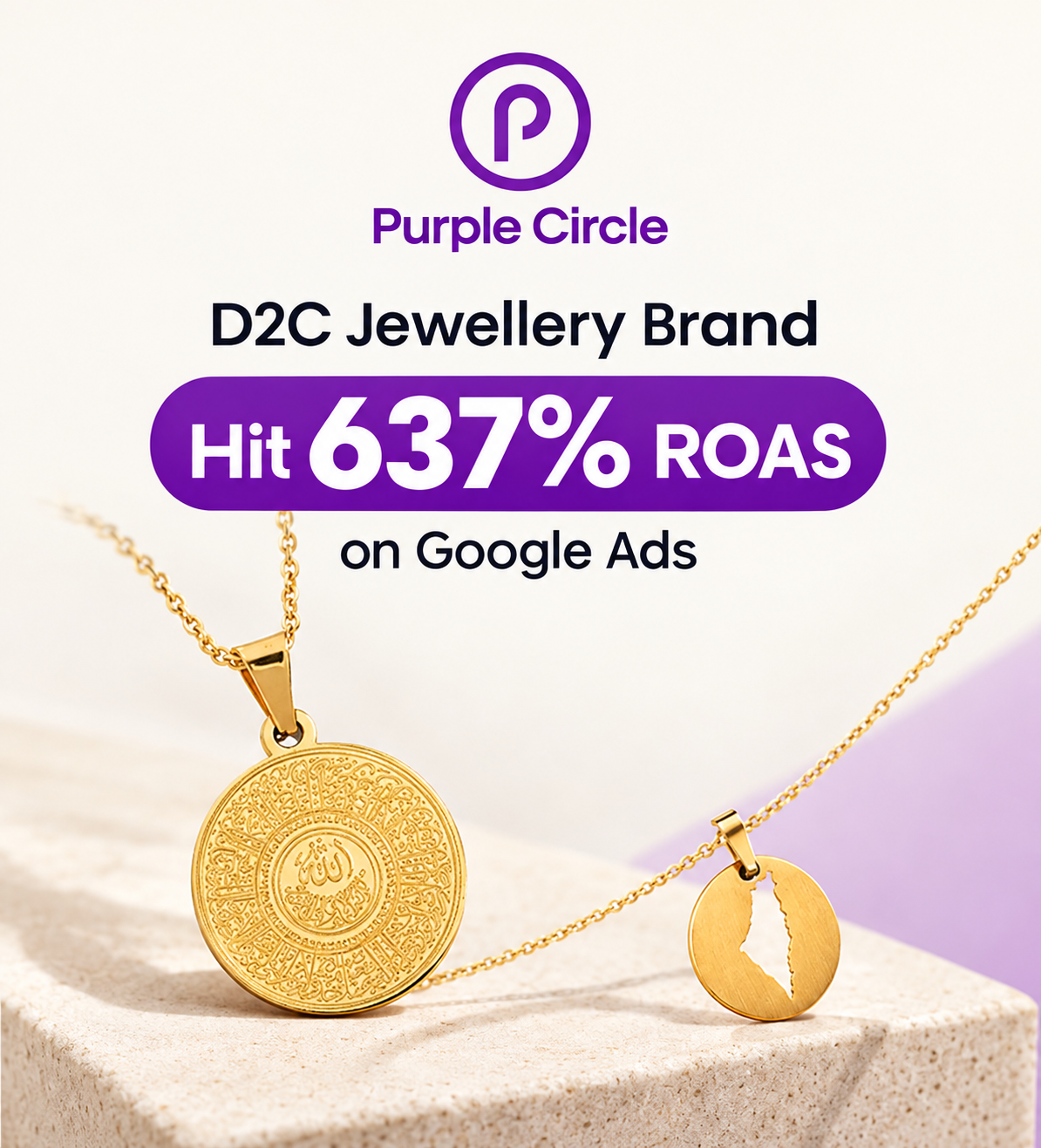
Purple Circle, a results-driven D2C marketing agency in the USA, helped a jewellery brand achieve an impressive 637% ROAS on Google Ads through intent-driven targeting, campaign restructuring, and focused budget allocation. The strategy prioritized high-converting searches and efficient ad spend, turning a lean budget into measurable revenue and sustainable D2C growth for the US jewellery market.
Why Most D2C Jewellery Brands Struggle With Google Ads
Jewellery is one of the hardest D2C categories to scale profitably on Google Ads. Purchase intent is emotional, average order values swing wildly between everyday and occasion-based pieces, and a huge share of “just browsing” traffic never converts. Most brands end up burning budget chasing vanity clicks instead of buyers.
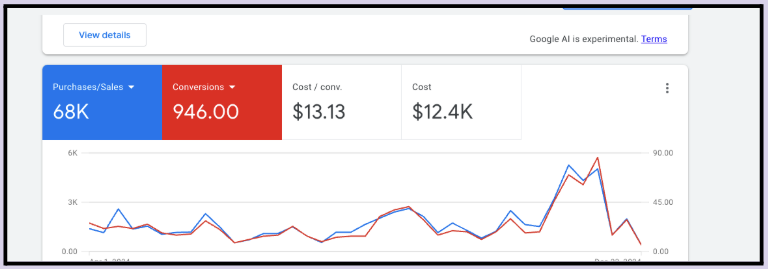
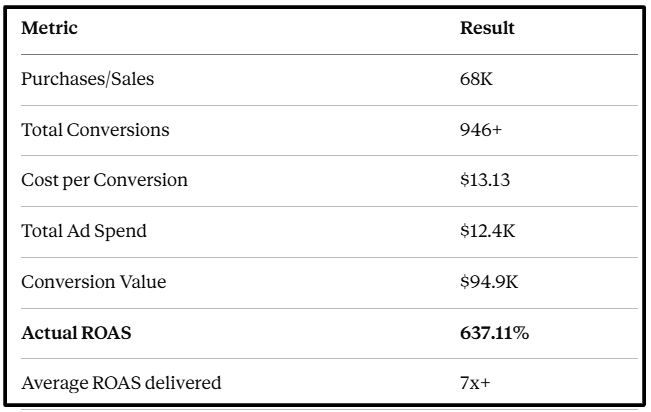
At Purple Circle, we work exclusively with D2C fashion and jewellery brands to fix exactly this problem — turning ad spend into predictable, repeatable revenue. This is a real breakdown of how we took a jewellery brand from inconsistent sales to a 637.11% Actual ROAS, on a lean average monthly spend of just $1,000.
The Starting Point: Budget, Goals & Constraints
Before diving into results, here’s the context our strategy was built around:
- Average ad spend: ~$1K/month — a tight budget that demanded efficiency over experimentation
- Primary channel: Google Ads (Search + Shopping/Performance Max)
- Target ROAS benchmark: 7x
- Business goal: Profitable, scalable growth — not just traffic or impressions
For a jewellery brand, this meant every rupee/dollar had to work toward high-intent shoppers actively searching to buy, not casual scrollers.
Our Strategy: How We Engineered This Growth
1. Intent-First Keyword Architecture
We structured campaigns around purchase-intent keywords (e.g., “buy gold earrings online,” “silver necklace for wedding”) rather than broad, top-of-funnel terms. This kept spend concentrated on shoppers closer to checkout.
2. Shopping & Performance Max as Revenue Engines
Given the visual nature of jewellery, Shopping and Performance Max campaigns carried the heaviest lifting — letting Google’s inventory-aware bidding show the right product to the right searcher at the right moment.
3. Tight Budget, Tighter Optimization
With only ~$1K/month, there was no room for waste. We ran aggressive negative keyword pruning, weekly bid adjustments, and continuously cut underperforming ad groups to redirect budget toward proven winners.
4. Conversion Value Bidding, Not Just Conversion Count
Instead of optimizing purely for “more conversions,” we optimized for conversion value — pushing spend toward higher-AOV jewellery pieces, which is what drove the ROAS multiplier past 600%.
5. Seasonal Demand Capture
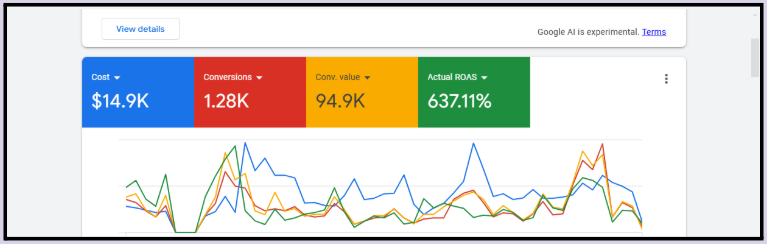
The visible spike in the performance graph reflects a deliberate strategy: identifying high-demand windows (festive/wedding season for jewellery) and scaling budget into the trend rather than reacting after it peaked.
 Why This Matters for Other D2C Jewellery & Fashion Brands
This case study isn’t about a one-off lucky campaign — it’s proof that a lean budget, correctly structured, can outperform brands spending 5–10x more without a clear intent-driven strategy. For jewellery brands specifically, the biggest lever isn’t spend — it’s precision: showing up for people who are ready to buy, not just people who are looking.
With the right strategy, Purple Circle Performance Marketing Agency helps brands turn focused ad spend into measurable growth, stronger ROAS, and more profitable customer acquisition.
Conclusion
Scaling a D2C jewellery brand profitably on Google Ads doesn’t require a massive budget — it requires the right strategy, tight execution, and a relentless focus on conversion value over vanity metrics. With just ~$1K/month in ad spend, Purple Circle helped this jewellery brand achieve 946+ conversions, $94.9K in conversion value, and a 637.11% ROAS — proving that smart, intent-led performance marketing consistently beats bigger, unfocused budgets. This is the exact playbook Purple Circle applies across every D2C fashion and jewellery brand we partner with: data-backed decisions, continuous optimization, and growth that’s built to scale, not just spike.
As a luxury ecommerce agency built specifically for premium D2C categories like fine jewellery, Purple Circle understands that high-AOV, emotion-led purchases need a different playbook than mass-market ecommerce — one built around intent, trust, and conversion value, not just clicks.
If you run a D2C jewellery or fashion brand and want results like this, Purple Circle can help you build a Google Ads strategy engineered for real, profitable growth.
Frequently Asked Questions
1. What is a good ROAS for a jewellery brand on Google Ads?
A healthy ROAS for jewellery D2C brands typically ranges between 3x and 5x, depending on margins and average order value. Purple Circle’s campaign delivered 637.11% (6.37x), well above the industry standard.
2. Can a small budget like $1,000/month actually generate profitable growth on Google Ads?
Yes — with the right keyword targeting, conversion value bidding, and continuous optimization, even a lean budget can outperform larger, poorly optimized ad accounts. This case study is direct proof of that.
3.Which Google Ads campaign types work best for jewellery and D2C fashion brands?
Shopping campaigns and Performance Max typically perform best for jewellery, since these formats are highly visual and rely on strong product feed optimization paired with Search campaigns for high-intent keyword capture.
4. How long does it take to see results from Google Ads for a jewellery brand in the USA?
Most US jewellery brands start seeing meaningful performance data and early conversion trends within 4–8 weeks. Results can improve over time as Google’s algorithm gathers more conversion data and campaigns are continuously optimized based on performance.
5. Why does Purple Circle focus on conversion value instead of just conversions?
Optimizing for conversion value ensures ad spend is directed toward higher-value purchases, not just the highest volume of cheap conversions — this is a key reason the ROAS reached 637% instead of a lower, volume-driven number.