
⭐️
From
From ₹5 Lac to ₹1 Crore: How We Fixed a “Broken” High-AOV Apparel Store
Trusted by 235+ brands





The Niche
A high-AOV apparel brand. Products ranging from ₹4,000 to ₹40,000. Not your average “buy one get one” D2C store, this was premium fashion, the kind where people actually think before they buy (or at least pretend to).
The Pain Points
On paper, the brand was running. In reality, it was limping.
Monthly sales sat between ₹5 to ₹8 lac at 3X ROAS, which sounds fine until you realize the brand relied heavily on COD. And COD, for a high-ticket apparel product, is basically an open invitation for fake orders. 40% of orders were fake. Four. Zero. That’s not a leak, that’s a burst pipe.
Add to that a MER that made no sense on paper and you had a business that looked busy but wasn’t profitable, and definitely wasn’t scalable. Classic case of “vanity sales, zero peace of mind.”
What We Did
We didn’t touch one lever, we fixed the whole machine. Point by point:
-
Fixed the checkout with GoKwik
We implemented PPCOD (Prepaid on high-risk COD) through GoKwik checkout, targeting only the high-risk orders instead of blocking COD entirely. This single move cleaned up a huge chunk of fake orders without scaring away genuine COD buyers.
-
Fixed the placements
We pulled spend off WhatsApp, Audience Network, and Messenger. For a ₹4K to ₹40K apparel brand, these placements are a mismatch. People scrolling WhatsApp status or bumping into an ad mid-chat with a friend are not in a “let me spend ₹15,000 on a jacket” headspace. Audience Network is even riskier, it’s a black box of low-quality third-party apps and games where clicks are cheap but intent is close to zero. Premium buying decisions happen on considered, high-attention placements like Feed and Reels, not while someone’s waiting for a friend to reply “ok”.
-
Rebuilt creative with Manus
We allocated 40% of the total budget purely to creative testing. For production, we used Manus, one of the best tools we’ve used for scaling high-quality creative output fast, without turning the team into a 24/7 editing sweatshop.
-
Cleaned up audience targeting
Broad, unfiltered targeting was pulling in browsers, not buyers. We tightened audience signals so spend followed people who actually match the premium buyer profile, instead of anyone who once liked a fashion page in 2019.
-
Fixed the traffic-to-catalog flow
Once quality traffic started coming in through better creative and better placements, we let the catalog do its job through strong dynamic retargeting and product-led conversion paths, rather than sending everyone to a generic homepage and hoping for the best.
-
Rebalanced budget allocation
Instead of spreading spend thin across every campaign type, we consolidated budget behind what was actually working, creative testing and high-intent placements, and cut what was quietly draining money.
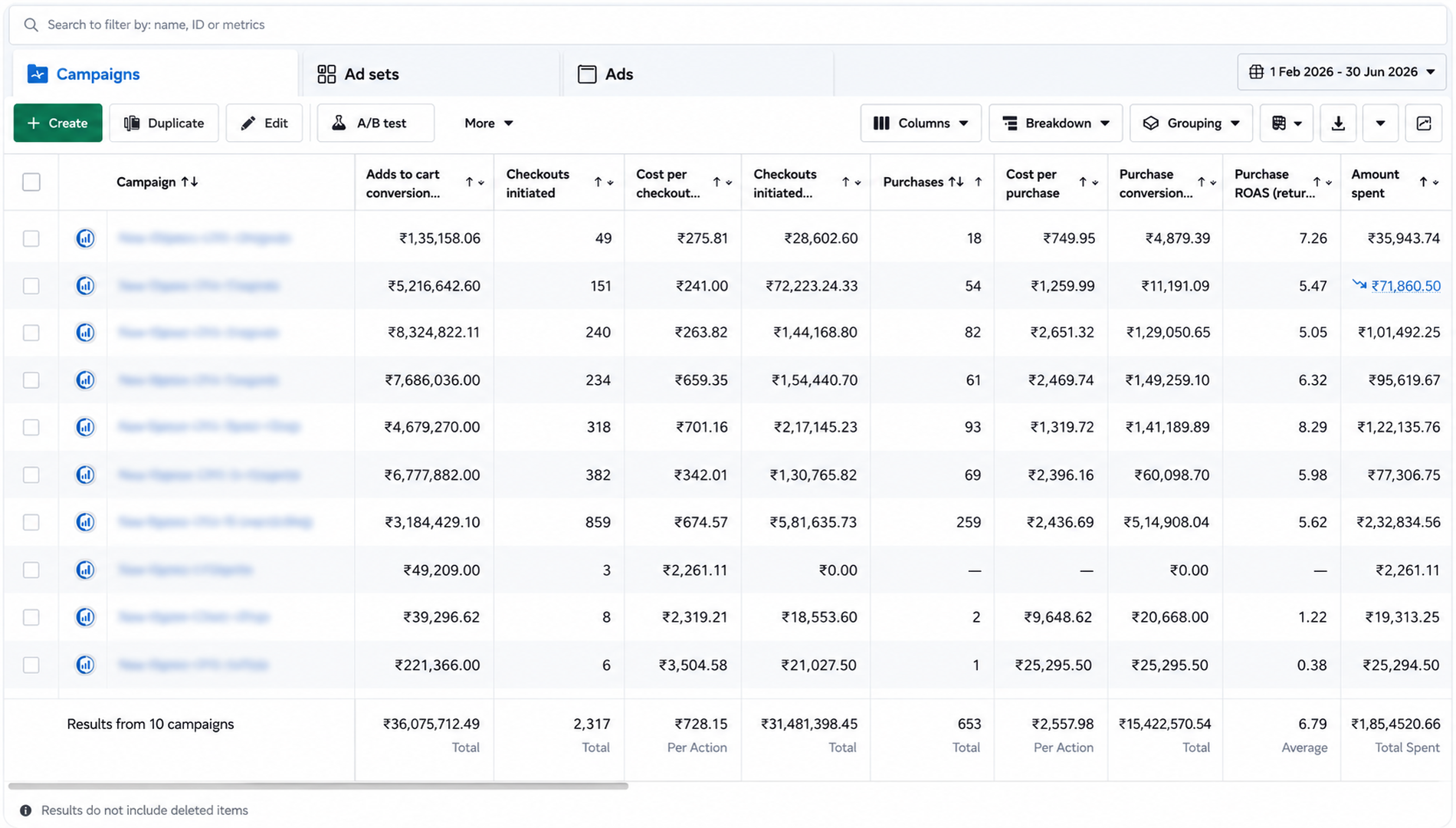
The result? We stopped chasing cheap, curious clicks and started attracting valuable, intent-driven traffic. From there, the catalog did what a good catalog should do: convert.
No magic. No “secret hack.” Just fixing the leaks before pouring in more water.
The Results
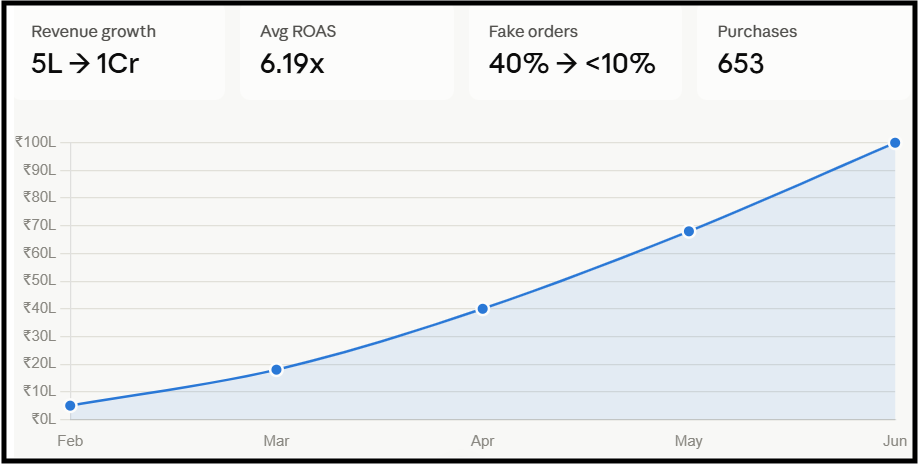
- Sales grew from a monthly average of ₹5 to ₹8 lac to ₹1 crore in 5 months (Feb 2026 to June 2026)
- New monthly average: ₹20 lac
- ROAS improved from 3X to a consistent 6X
- Fake COD orders dropped drastically thanks to PPCOD implementation
What started as a “we’re doing okay I guess” account turned into one of our most profitable scale stories this year. Sometimes growth isn’t about spending more, it’s about spending smarter, and making sure the traffic you’re paying for actually wants to buy, not just window shop and ghost the delivery boy.
Case study by Purple Circle