
⭐️
How
How Purple Circle Turned a $1K/Month Google Ads Budget Into 2.5x ROAS for a D2C Fashion Brand
Trusted by 235+ brands





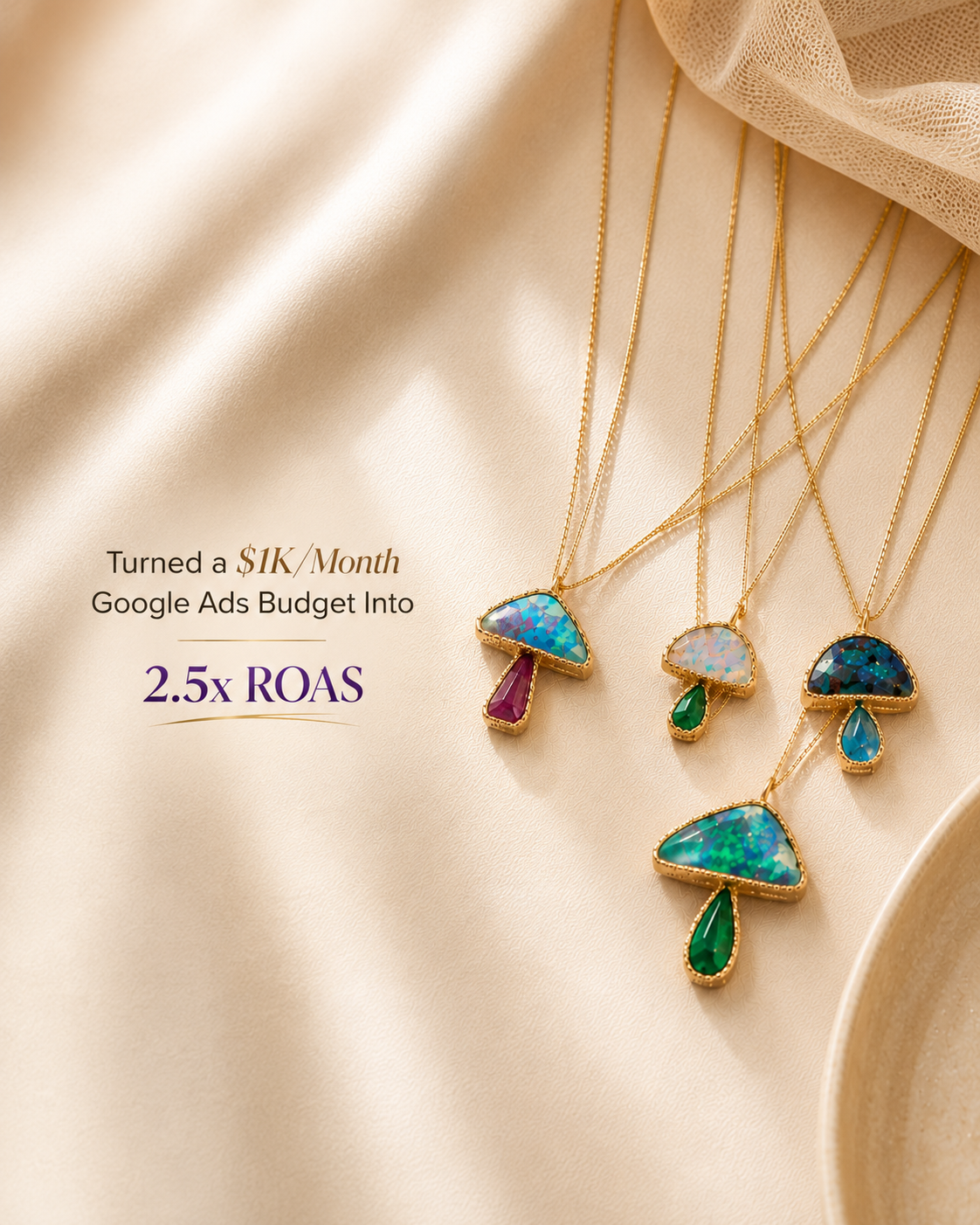
Agency: Purple Circle — Performance Marketing for D2C Fashion Brands Channel: Google Ads Budget Scale: ~$1,000/month average ad spend Result: 2.5x average ROAS | 252.33% actual ROAS in peak reporting window | 23K in conversion value from 11.4K clicks
Quick Summary
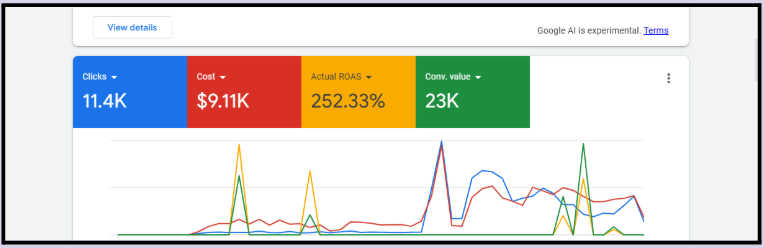
Purple Circle managed a Google Ads account for a D2C fashion brand operating on a lean ~$1,000/month budget. Over the reporting period, the account generated 11.4K clicks, $9.11K in total spend, 23K in conversion value, and an actual ROAS of 252.33% — translating to a sustained average ROAS of 2.5x. This case study breaks down the strategy, execution, and results, and explains how Purple Circle makes small-budget performance marketing accounts profitable for D2C fashion brands.
The Challenge
Small and mid-sized D2C fashion brands often face the same problem: they don’t have the ad budgets of large players, but they still need Google Ads to deliver measurable, profitable returns — not just clicks and impressions. The brand Purple Circle worked with had:
- A modest monthly ad budget of roughly $1,000
- The need to compete in a crowded, highly seasonal fashion category
- A requirement for consistent profitability rather than sporadic spikes in performance
- Limited room for wasted spend, meaning every rupee/dollar needed to work harder
The goal was simple to state but hard to execute: make a small budget behave like a well-optimized, high-performing account.
Purple Circle’s Approach
1. Tight Campaign Structure for Budget Efficiency
Rather than spreading the $1K/month budget thin across broad campaigns, Purple Circle structured the account around tightly themed ad groups aligned to specific product categories and search intent. This reduced wasted impressions and kept cost-per-click efficient even on a limited budget.
2. ROAS-First Bidding Strategy
Instead of optimizing purely for clicks or conversions, the account was managed with a strict ROAS-first mindset — reallocating spend toward keywords, products, and audiences that were proven to convert at a healthy return, rather than chasing volume.
3. Continuous Creative & Keyword Refinement
Ad copy, product feed data, and keyword targeting were reviewed and refined on an ongoing basis to keep quality scores high and cost-per-click low — critical for making a limited budget stretch further.
4. Seasonal & Demand-Based Spend Allocation
Fashion is inherently seasonal. Purple Circle adjusted spend allocation around demand spikes visible in the account’s performance trends, pushing budget toward high-intent windows rather than spreading it evenly across the month.
With a smaller budget, there’s less room for error. The account was actively monitored rather than left on autopilot, allowing quick reallocation the moment a campaign’s ROAS dipped below target.
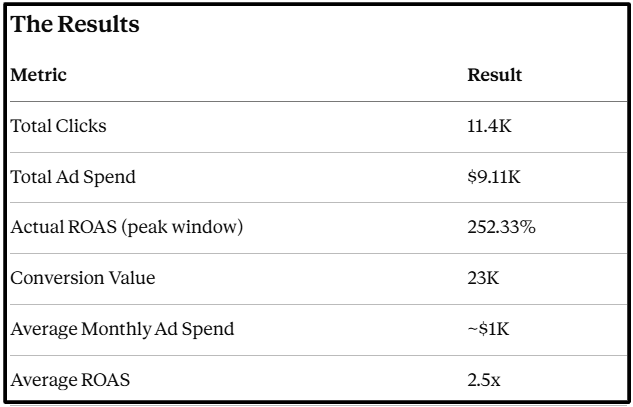
What this means in plain terms: for every dollar spent on Google Ads, the brand generated roughly 2.5x that amount back in conversion value on average — with peak-performing periods pushing well beyond that baseline. This was achieved without inflating the budget, proving that disciplined account management can outperform simply spending more.
Why This Matters for D2C Fashion Brands
Most D2C fashion brands assume that strong Google Ads performance requires a large budget. This case study shows the opposite: with the right campaign structure, bidding discipline, and ongoing optimization, even a lean $1,000/month budget can consistently deliver profitable returns. This is the core philosophy behind how Purple Circle approaches performance marketing — profitability first, scale second.
Conclusion
This case study demonstrates that real, sustainable growth in D2C fashion doesn’t always require a massive ad budget — it requires disciplined strategy, constant optimization, and a relentless focus on ROAS over vanity metrics.
By restructuring campaigns around intent, prioritizing profitable keywords, and actively managing spend in real time, Purple Circle helped this D2C fashion brand achieve a 2.5x average ROAS on just $1K/month, with peak performance windows exceeding 250% actual ROAS. For fashion brands looking to scale profitably rather than just spend more, this is proof that smart, hands-on performance marketing consistently outperforms budget alone.
Purple Circle continues to apply this same profitability-first approach across its portfolio of D2C fashion brands.
Frequently Asked Questions
1. What is ROAS and why does it matter for D2C fashion brands?
ROAS (Return on Ad Spend) measures how much revenue is generated for every dollar spent on advertising. For D2C fashion brands, tracking ROAS is critical because it shows whether ad spend is actually driving profitable sales, not just traffic or impressions.
2. Can a small Google Ads budget like $1K/month actually be profitable?
Yes. This case study shows that with a tightly structured account, ROAS-first bidding, and continuous optimization, even a modest $1,000/month budget can consistently deliver a 2.5x average return, proving that strategy matters more than budget size.
3.How does Purple Circle improve ROAS for fashion brands on Google Ads?
Purple Circle focuses on tight campaign structuring by product category, ROAS-first bid management, ongoing keyword and creative refinement, and active, hands-on account monitoring rather than automated “set and forget” management.
4.What results did this case study achieve?
The account generated 11.4K clicks, $9.11K in total spend, 23K in conversion value, and an actual ROAS of 252.33% during its peak reporting window, with an average ROAS of 2.5x across the campaign period.
5. Is Google Ads a good channel for D2C fashion brands?
Yes, Google Ads works well for D2C fashion brands when campaigns are structured around high-intent search behavior and managed with a profitability-first approach, as demonstrated in this case study.
6. How can a D2C fashion brand get similar results with Purple Circle?
Brands looking for similar performance marketing results can work with Purple Circle to audit their existing ad accounts, restructure campaigns around ROAS, and implement the same disciplined, intent-driven strategy used in this case study.