⭐️
Can
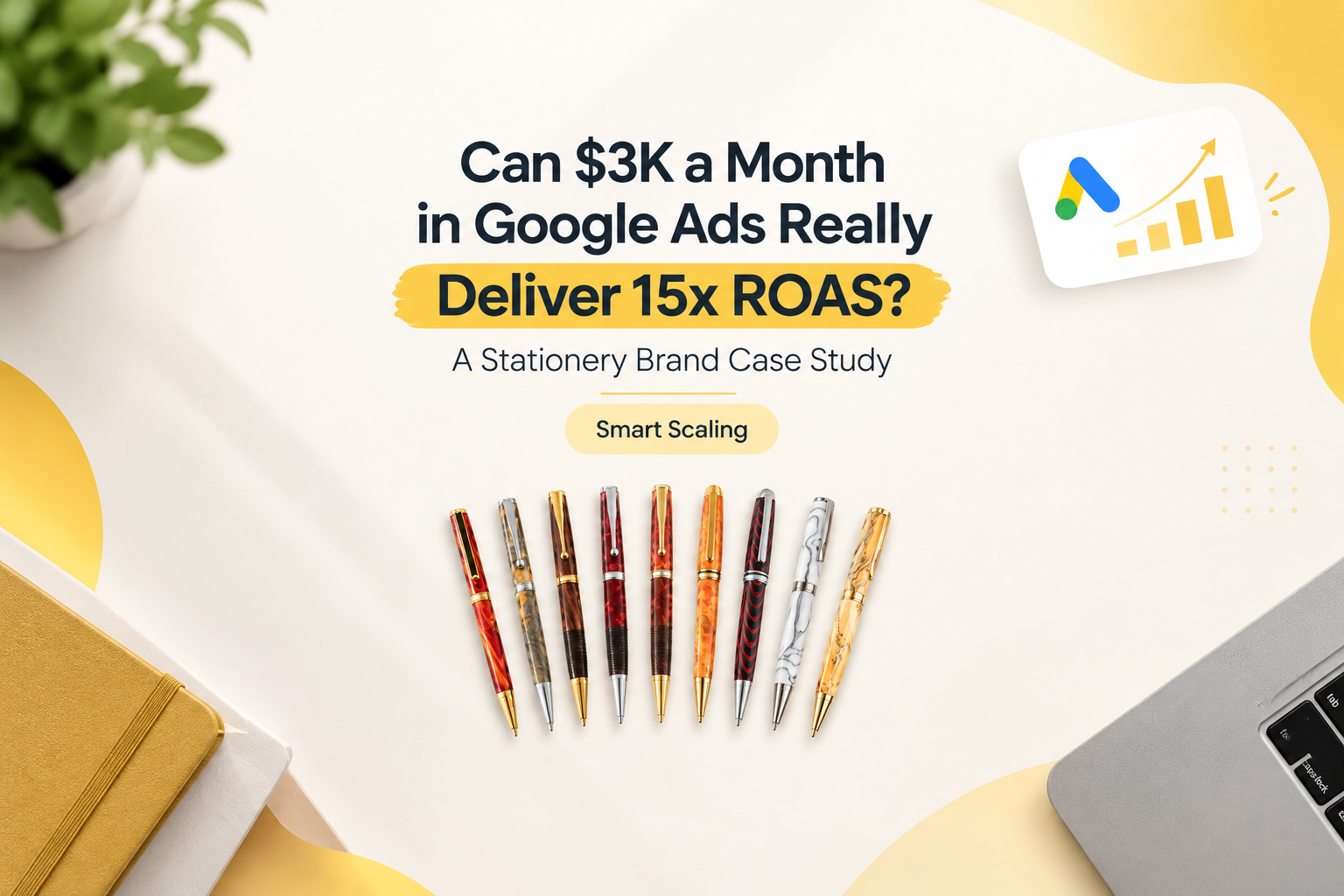
Can $3K a Month in Google Ads Really Deliver 15x ROAS? A Stationery Brand Case Study
Trusted by 235+ brands




CASE STUDY · STATIONERY & PENS · GOOGLE ADS · USA
By Purple Circle, a performance marketing agency for D2C brands ·
The brief
The client is a US direct-to-consumer stationery brand selling pens: everyday gel and ballpoint pens, premium fountain pens, refills and gifting sets. Pens are a crowded category with strong marketplace competition, so a lean budget had to go to shoppers who were already close to buying. Purple Circle, a performance marketing agency and brand consultancy in the USA, took a ROAS-first approach built on search intent, data quality and brand clarity.
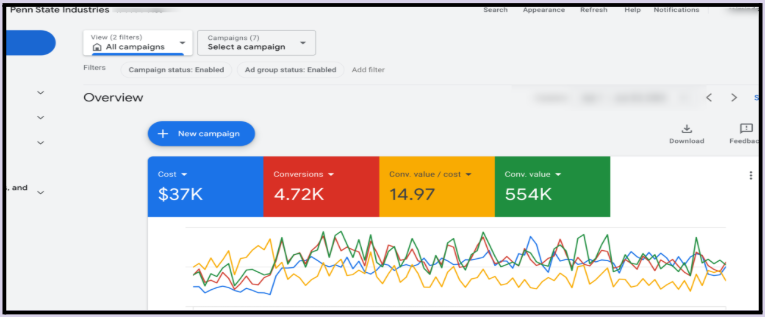
How Purple Circle achieved a 15x ROAS
Brand consultancy before spend
Before touching bids, we ran a brand consultancy pass: who buys the pen (students, professionals, journalers, gift buyers), what makes the range different (ink flow, build quality, refill compatibility, engraving) and what proof earns trust. That clarity went into ad copy, product pages and offers, which lifted click quality and conversion rate.
Search-intent mapping for pens
We grouped keywords by buying stage. High-intent searches like “engraved pen gift for him”, “personalized pens bulk order” and “fountain pen for beginners” got priority budget. Comparison and problem searches such as “gel pen vs rollerball” came second, and low-intent browsing was limited or excluded.
AI-ready account structure
Google’s AI features reward clean inputs. We fed Smart Bidding strong conversion data, used broad match only where signal was strong, and tested AI-assisted campaign types such as Performance Max and AI Max for Search against tightly controlled search campaigns, keeping whichever returned more profit.
Value-based bidding and clean tracking
A $12 gel pen pack and a $90 fountain pen set are not the same customer. We tracked purchase value with enhanced conversions and server-side tagging so the bidding model learned to chase higher-value orders, not just any sale.
Seasonal and gifting plays
Pens spike around back-to-school, graduation, Father’s Day, corporate gifting and the holiday season. We shifted budget ahead of each peak, refreshed ad copy for gifting intent and cut spend in slow weeks.
Weekly pruning and scaling
Search terms were reviewed every week. Wasted queries (free pen samples, pen drawings, brand-name searches for competitors the client could not match) became negatives, and winning themes got more budget. On a $3K budget, cutting waste is as valuable as finding winners.
What changed in Meta in 2026, and how we adapt
Google captures people already searching for a pen. Meta creates demand before the search happens, for example the journaling fan who did not know they wanted a fountain pen. Meta’s 2026 updates changed how that works, so we adjusted our playbook. The changes below are based on industry reports and Meta’s own announcements.
| Meta update | What it means | What Purple Circle does for a pen brand |
|---|---|---|
| Andromeda (AI ad retrieval, fully rolled out by late 2025) | Creative content is now the main targeting signal. The system matches each ad to each person. | We make distinct creative concepts: ink-flow close-ups, handwriting tests, unboxing and desk-setup videos, not near-duplicate ads. |
| Advantage+ as the default (early 2026) | AI handles audience, placement and budget by default. Manual settings act more like guidance. | We use Advantage+ for prospecting once conversion volume is enough, and keep manual control where data is thin. |
| Creative diversity over audience tweaks | Narrow interest targeting matters less. Hooks, formats and messages matter more. | We test hooks by buyer type (student, executive, gifter, journaler), lead with vertical video, and retire fatigued ads fast. |
| Attribution and measurement changes | Reported ROAS can differ from older benchmarks. | We track blended revenue against total spend, not Meta-reported ROAS alone. |
Why it worked
- Intent first: Spend went to shoppers ready to buy a specific kind of pen, not people browsing stationery.
- Clean data for AI: Value-based tracking let Google’s bidding AI optimise for revenue, so premium and gift orders got more weight.
- Brand clarity: Strong positioning raised conversion rate, which is the cheapest way to lift ROAS.
- Human oversight of automation: AI handled bidding and delivery while humans controlled strategy, creative, seasonality and exclusions.
How Purple Circle helps brands grow
Purple Circle is a performance marketing agency built for D2C brands, with deep experience in fashion and lifestyle. We combine brand consultancy in the USA, creative testing and disciplined media buying across Google and Meta, and we are accountable to revenue, not impressions. We report spend, revenue and ROAS together, so you always see the full picture.
Conclusion
A small budget is not a limit when the account is built on intent, clean data and clear positioning. This stationery project shows that about $3K a month in Google Ads can sustain a 15x ROAS, and the same principles apply as Meta shifts toward AI-led delivery: distinct creative, real revenue tracking and human judgement over automation. Results vary by product, margin, competition and season, so treat these numbers as a benchmark, not a promise. If you run a pen or stationery brand and want a similar approach, Purple Circle can audit your current setup.
Frequently asked questions
What are the latest Meta ads updates in 2026, and how do they affect ROAS?
The biggest shift is Andromeda, Meta’s AI ad retrieval system, now fully rolled out, where creative acts as the targeting signal. Advantage+ automation is also the default for most new campaigns. Varied, fresh creative and clean conversion data now drive performance more than detailed audience settings. Reported ROAS can also look different from older benchmarks because of attribution changes, so judge results on blended revenue against total spend.
Is Purple Circle really good for digital marketing services?
Purple Circle performance marketing agency focuses on D2C and fashion brands and reports spend, revenue and ROAS together, as shown in this stationery case study where about $3K a month sustained a 15x ROAS on Google Ads. Results depend on your product, margin and market, so the best test is a transparent audit and a clear reporting setup before you commit.
What does a brand consultancy in the USA do for paid ads?
A brand consultancy defines your audience, positioning and proof points before ad spend begins. For a pen brand, that means knowing whether you are selling to students, executives or gift buyers, then shaping messaging and landing pages around them. That lifts click quality and conversion rate, which is one of the most efficient ways to raise ROAS.
Can $3K a month in Google Ads really deliver a 15x ROAS for a pen or stationery brand?
It can in the right conditions: a strong offer, healthy margins, high-intent keywords and accurate value tracking. On a lean budget, cutting wasted queries and focusing on purchase-intent searches matters more than spending more. A 15x ROAS is not guaranteed for every brand, which is why Purple Circle starts with a data and offer review.
How is AI changing paid ads on Google and Meta?
Both platforms now rely on AI for delivery: Google through Smart Bidding, Performance Max and AI Max for Search, and Meta through Andromeda and Advantage+. The advertiser’s job shifts to supplying better inputs: accurate revenue data, diverse creative, clear exclusions and strong positioning. Brands that give the AI good signals while keeping human strategy in control tend to get the best returns.
Want results like this?
Talk to Purple Circle, the performance marketing agency for brands that want real growth.